How VidAudit Cuts Security Footage Review Time by 90%
Replacing hours of manual video scrubbing with minutes of AI-flagged clips.
Security officers don't have a footage problem. They have a time problem.
A standard commercial facility generates 10–20 hours of camera footage per shift. After an incident — a theft, a fight, a premises liability claim — someone has to watch all of it. That job lands on a supervisor with 12 other things to do. It takes hours. Sometimes it takes days. And in the time between the incident and the review, evidence gets overwritten, witnesses go home, and the window to act closes.
VidAudit closes that window.
How it works
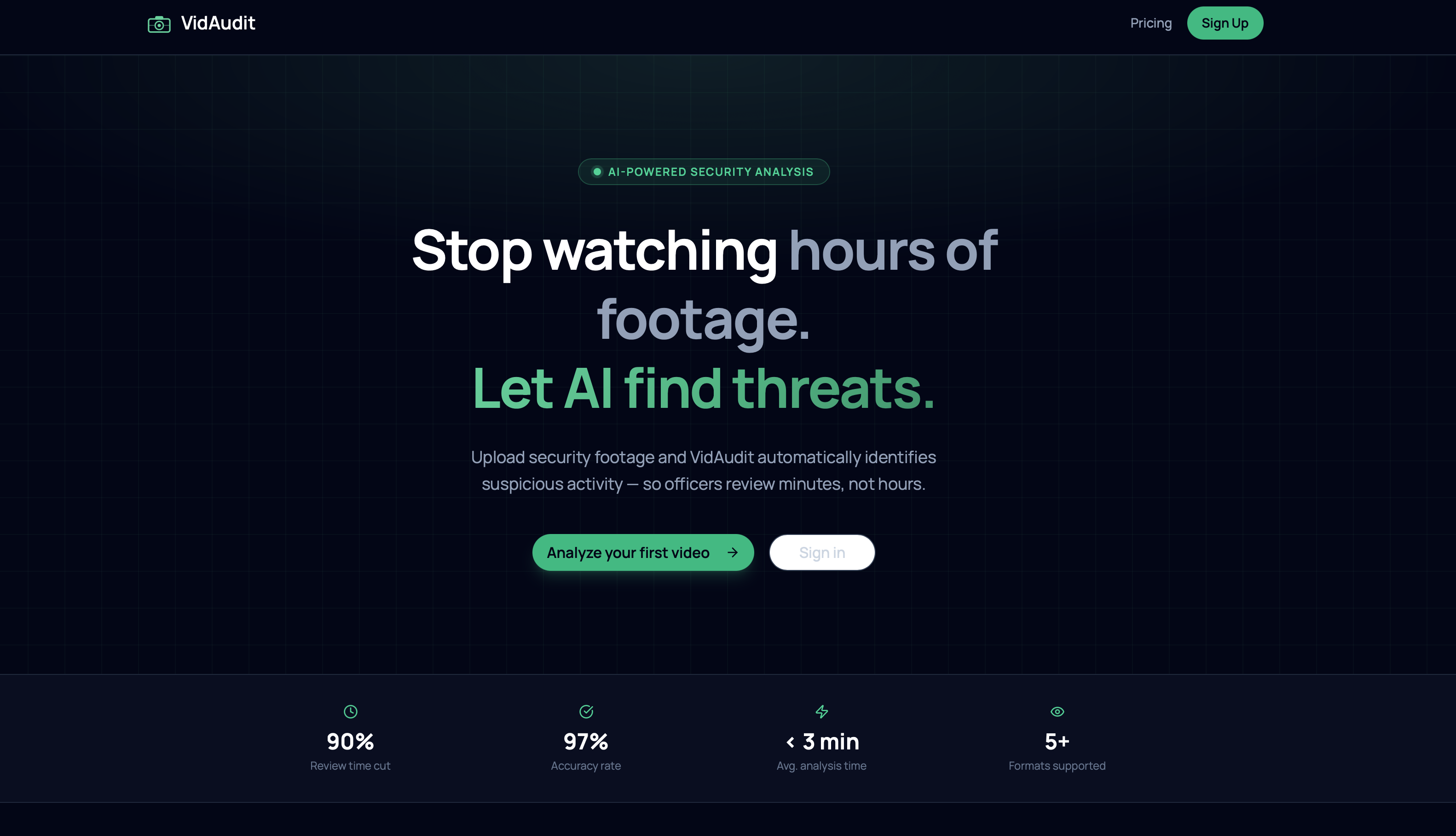
Upload a clip. VidAudit sends it through Gemini's video understanding API and returns a timestamped log of every meaningful event: movement patterns, object presence, behavioral flags. Officers jump straight to the flagged moments instead of scrubbing from the beginning.
Average analysis time: under 3 minutes. A clip that used to require an hour of review becomes a 5-minute task.
Why the output format matters
The output isn't a confidence score buried in JSON. It's a plain-language event log — "person enters frame at 0:42, removes item from shelf at 1:14, exits at 1:31" — formatted for handoff to a supervisor, HR, or legal counsel.
No model jargon. No threshold tuning. No explanation required.
That matters in enterprise security. The people using this tool aren't ML engineers. They're officers who need to write an incident report in 20 minutes and get back on the floor.
Where it runs
VidAudit is live in a production enterprise security operation. Footage stays on Vercel Blob, access is scoped per team, and nothing trains on client data.
→ Try VidAudit at videoudytr.vercel.app
If you run a security operation, loss prevention program, or facilities compliance team, I'd be glad to walk you through it.